Goa is first choice for honeymoon in India as it has that romantic weather with beaches, nightlife, shopping.So come and enjoy your honeymoon in Goa.
Goa India TourismBeaches of GoaGoa India TourismGoa Beach TourBeach in Goa
OWNED BY GOAINDIATOURISM. India's Leading Tour Operator Since 1999


Home >> Goa Travel Guide >> History of Goa

History of Goa

<PREVIOUS  | 1 | 2 | 3 | 4 | 5 | 6 | 7 | 8 | 9 | 10 | NEXT>

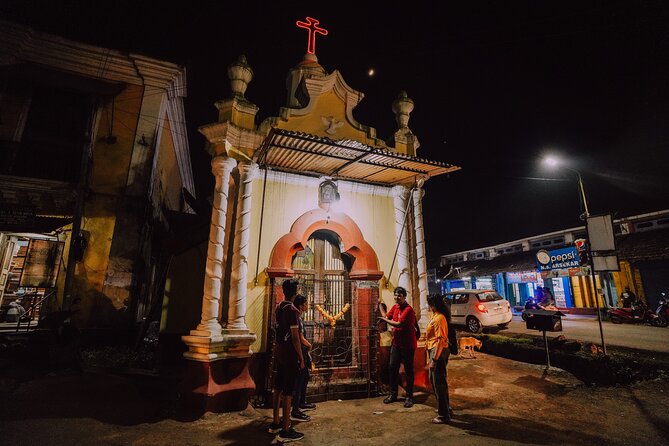
The beginning of the Inquisition in Goa started in 1560. Aimed primarily against the new converts to Christianity, it also took action against any Hindu practicing, his. religion openly. The inquisition was a Tribunal presided over by the 'Grant Inquisitor' a judge sent from Portugal. Even the Governor of Goa did not have control over him. He and his two other judges framed their own codified rules and laws. The terror it spread and the misery it caused is unprecedented. It went on for two hundred years and many a so called heretic was burned alive under its orders. Finally under the pressure of the British, it was abolished on 16th June 1812. The Palace of the Inquisition is now destroyed and all that remains is a table said to have belonged to it. There is a chair in a private collection. However, one more relic of the Inquisition is the Cross with a beautifully executed figure of Christ. It is almost life like and preserved in the Chapel of St. Sebastian in Panjim. It is a unique representation where the head is erect and the eyes open.

Old Portuguese Fort Cabo da Rama South Goa Goa IndiaAlong with the Inquisition, the efforts of the Portuguese continued to convert the local populace. The Archbishop of Goa also had control over Cochin and Malacca. From time to time, meetings known as Provincial Councils were held by the Archbishop. The first Council was held in 1567. This was followed by Councils in 1575, 1585, 1592 and 1606. Repression and conversions continued till about the end of the 16th century. After that the zeal of the Portuguese lessened. At any rate, Goa had a Christian population of about 50,000 by the beginning of the 17th century. Daman also had a small Christian population, while Diu had none.

Events in Europe soon took their toll against the Portuguese in India. In 1580, Portugal came under the Spanish Rule. This domination' continued till 1640. The Dutch were fighting against the Spanish to free themselves from their rule. They were very good sailors. This fight spread to the colonies and in India, the Dutch posed a serious challenge to the Portuguese. The English also had their differences with the Spanish in Europe and helped the Dutch. Initially, the Dutch sent out trading fleets in 1597, 1598 and 1601. In 1604, the Dutch blocked Goa from the sea. They also entered into an Alliance with the Samundri of Calicut against the Portuguese. Henceforth blocking of Goa by the Dutch fleet became a regular feature every year. Thus they stopped the free movement of the Portuguese ships from Mandovi river. This caused great damage to the Portuguese. Their commerce suffered very badly and they lost most of their territories. In 1614, the Mughal Emperor sought the help of the Dutch fleet to attack Diu and Daman. However before anything could come out of it, there was peace between the Mughals and the Portuguese. Muhammed Adil Shah entered into a Treaty with the Dutch against the Portuguese. The outcome of this Treaty, however, was not much as the Kingdom of Bijapur was not strong enough by this time to do much. However, the Dutch blackade of Goa regularly continued during the period 15361641. The Portuguese lost their best 3 warships in a Dutch raid on Mormugoa harbour in 1639. As many as over 4000 men and 155 ships are estimated to have been lost to the Duch during 16291635. This weakened the Portuguese so much that they lost territories in India, and Ceylon to the Dutch by 1640. There was a truce for 10 years from 1641 to 1651, but war continued between the Dutch and Portuguese in India and Ceylon till 1644. The Dutch ships blockaded Goa from sea between 1641 and 1644. In 1648, a peace treaty was signed in Europe between the Duth and the King of Spain. However, the state of war continued in the East between, the Dutch and the Portuguese. By the time, peace came in 166869, the Portuguese had lost the whole of Ceylon and forts and territories South of Goa as well as other areas, except Diu, Daman and Bassein. The Spanish yoke in Europe thus proved disastrous for the commercial and territorial aspirations of the Portuguese in the East.

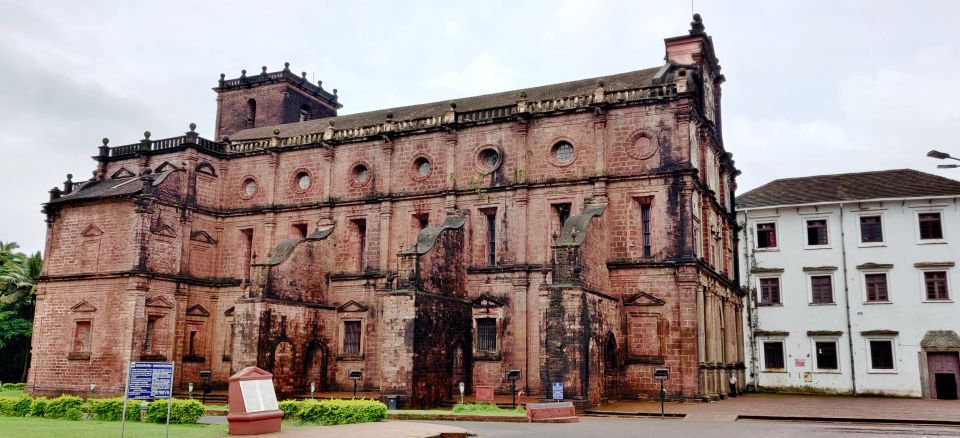
Even before the Dutch interlude was over, the Portuguese had to face the might of the Maratha Empire. Shivaji, while consolidating his hold against the Mughals, also attacked the Bijapur Sultan with skillfully planned gurrilla raids, he managed to acquire many strongholds of the Bijapur Sultan's. While some areas on the borders of Goa were administered directly by the Sultan of Bijapur, areas like Bicholim and Pernem were ruled by Desais who were vassals of the Sultan. Shivaji in 1664 took possession of Kudal The Basilica of Bom Jesus built 1594 Old Goa UNESCO World Heritage Site Goa India AsiaBicholim and Pernem and thus acquired a common border with Goa. The Sultan of Bijapur was in no position to help the Desais and they fled to Bardez for shelter. An attack on Goa by Shivaji seemed imminent but while Shivaji attacked territories south of Goa, he did not challenge the Portuguese. Perhaps the Mughal attack under Mirza Raja Jai Singh on Shivaji saved the day for the Portuguese who saw with great relief the departure of the army of Shivaji towards the North. The next two years saw Shivaji busy with Mughal army under Jai Singh. After that a series of clashes occurred at the Goa borders. Shivaji's complaint was that the Desais were making raids into their former territories from the safety of Bardez. When Shivaji's patience wore thin, he carried out a punitive raid into Bardez in 1667. The Marathas plundered the villages at will and are said to have taken away as many as 1600 prisoners. The Portuguese hastily entered into a Treaty with Shivaji and along with other things promised to control the Desais. The prisoners were released. Next year, Shivaji again camped in Bicholim. Over 500 of his agents were driven away by the Portuguese who it seems discovered the plot to takeover Goa just in time. In 1666, Shivaji also attacked Ponda which was garisoned by the Adil Shah troops. The Desais and the Portuguese aided these troops to successfully resist Shivaji. When in 1672, Shivaji conquered the Raja of Ramnagar near Daman, he demanded the tribute due to the Raja from the Portuguese of Daman. The Portuguese delayed the payment of the tribute and also helped the Raja of Ramnagar to continue the struggle. However, in 1677, Shivaji finally defeated the Raja. He now prepared to attack Goa. In the meantime in 1675, Shivaji had again besieged Ponda and conquered it in spite of the aid sent by the Portuguese in Goa to the Sultans troops in Ponda. All was ready when the untimely death of Shivaji in 1680 saved the Portuguese.

Tour Enquiry Form
(* represents compulsory fields)
* Name :  
* Phone : (Include Country/Area Code)  
* City  
* Your Country :  
* E-Mail Address :  
* Tentative Date of Travel:  
Number Of Nights To Stay  
No. of People Travelling:   Adult      
  Children
* Any specific requirements:


Copyright © 2007-08 Goa India Tourism.com. All Rights Reserved.

history, history of Goa,Goa history, background of Goa, Goa Background, historu Goa India, Goa hotels, Goa hotel, Goa packages, Goa tour, Goa vacation, hotels in Goa, Goa trip, honeymoon in Goa.