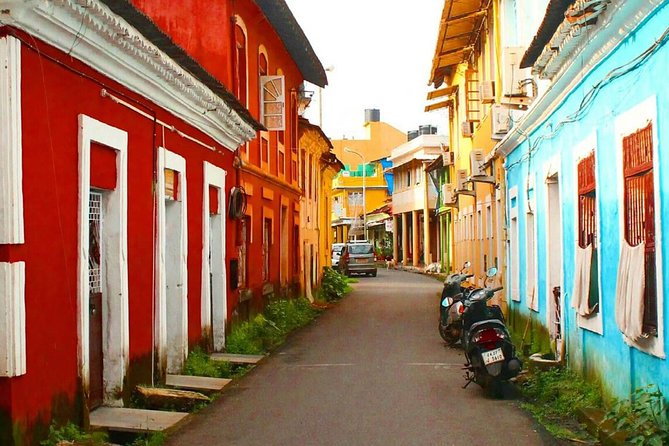
Goa is first choice for honeymoon in India as it has that romantic weather with beaches, nightlife, shopping.So come and enjoy your honeymoon in Goa.
Goa India TourismBeaches of GoaGoa India TourismGoa Beach TourBeach in Goa
OWNED BY GOAINDIATOURISM. India's Leading Tour Operator Since 1999


Home >> Goa Travel Guide >>  History of Goa

History of Goa

<PREVIOUS  | 1 | 2 | 3 | 4 | 5 | 6 | 7 | 8 | 9 | 10 | NEXT>

Kingdom. EinulMulk Gilani who had been made Governor of Goa by Mahmud Shah after the death of Bahadur Gilani continued to be the Governor of Goa till Adil Shah took over Konkan from him in 1502 A.D. In 1510 A.D. the Portuguese conquered Goa.

The Portuguese when they came to India were not merely traders. They came with crusading zeal. They had just barely ousted the Moors from Granada in 1492 when eighteen years later Afonso de Albuquerque's fleet sailed up the Mandovi River and conquered Goa. The Portuguese Commander was courageous and romantic and with a fleet of only 23 ships and 1200 men he boldly attacked. Timoja, the Commander of the Vijayanagar fleet, is stated to have invited Albuquerque to attack and takeover Goa. Thus on 3rd March 1510, the Portuguese became masters of Goa a flourishing port and town. The public seem to have welcomed them as they were quite disgusted with the Adil Shah rule.

However, by May 16, Ismail Adil Shah sent a strong army to regain Goa. The Portuguese were put to flight as they were far out numbered. On May 20, Albuquerque sailed in his ships and laid anchor at the widest pLighthouse at a fort Fort Aguada Goa Indiaoint on the River opposite Panaji. In October, he fled to the sea and was reinforced by a fresh fleet and men from Portugal. He again attacked Goa. A contested battle was fought and he reconquered Goa on 15.11.1510. However, he lost a lot of men in the battle. There was a general massacre of the Muslims and over six thousand perished. The pressure still continued from the Bijapur armies. When in April 1511 Albuquerque left Goa to attack Malacca, the Portuguese were attacked by Puladh Khan. He ousted Helrao and Timoja from the Rosal Khan surrendered just. One day before the arrival of reinforcement and Goa was saved for the Portuguese. Both Bijaipur and Vijayanagar wanted a regular supply of horses from the Portuguese. The Vijayanagar Emperor offered to help the Portuguese against Adil Shah. In turn Adil Shah who also wanted the horses sent his emissary to the Portuguese. As such both did not do anything to oust the Portuguese who consolidated their hold. When Albuquerque died on December 15, 1515, he had managed to ensure that the Portuguese were well settled. War broke out with Adil Shah in 1516. Goa was surrounded by the Adil Shah forces. However, reinforcements arrived and Adil Shah retreated. In 1520, war broke out between Adil Shah and the Vijayanagar Empire. The Portuguese taking advantage of the situation captured Bardez, Ponda and Salcete. Two years later, however, Adil Shah recovered back his territory.

The Governor of Belgaum, Ashad Khan, rebelled against Adil Shah in 1532. He sought help from the Portuguese and in turn handed over Bardez and Salcete. In 1534, however, the Shah died to be succeeded by his son Ismail. He happened to be a friend of Ashad Khan. So Ashad Khan gaining strength from this event attacked the Portuguese on their refusal to return Bardez and Salcete. In 1536, Ashad Khan attacked with a very strong force. The Portuguese, sought peace and after destroying the newly built fort at Rachol in Salcete, handed, back to Ashad Khan both Salcete and Bardez. In the meanwhile, the Portuguese ac quired Diu from the Shah of Gujarat. Soon however the relations became strained between Ashad Khan and Ibrahim Adil Shah. Now both of them sought the help of the Portuguese who brought in Mir Ali, a rival of Ibrahim from Diu. At this Ibrahim Adilshah attacked Ashad Khan and sent an envoy to the Portuguese. The Portuguese, however, agreed to the offer of Salcete and Bardez made to them by Ibrahim. Thus, in 1543, these areas finally came under the Portuguese rule. This completed the "Old Conquests". In 1570, the kingdoms of Bijapur and Ahmednagar joined in an alliance with the Samudri of Calicut to drive out the Portuguese from the shores of India. The plan was to independently but simultaneously attack the Portuguese on all side in the territories earmarked for conquest by each. The Portuguese under the very able leadership of Luis de Ataide defeated all the attacks launched against them from various directions including the attack of Adil Shah against Goa.

Missionary Conversions:
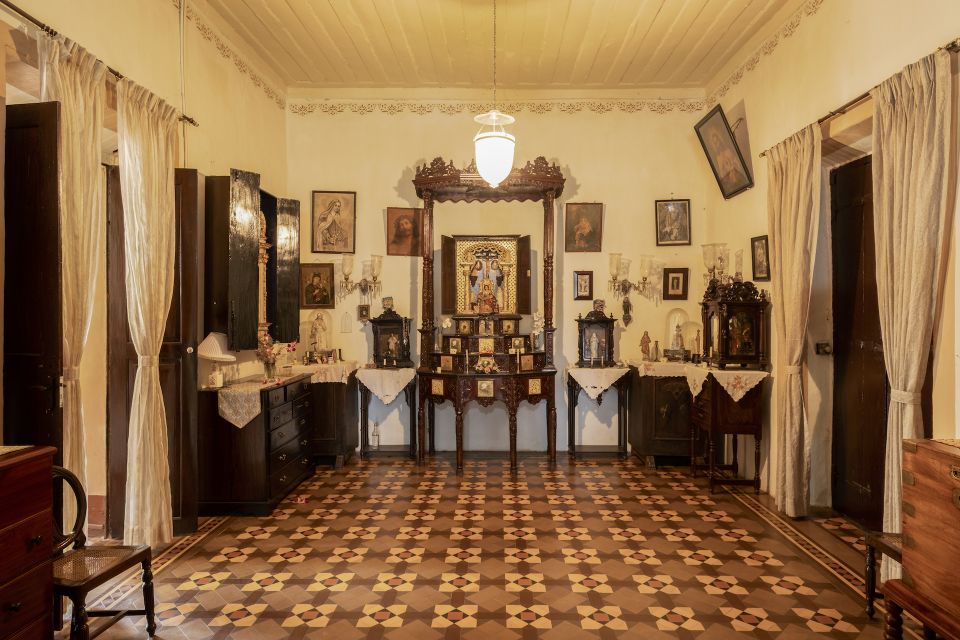
Lighthouse at a fort Fort Aguada Goa IndiaMissionaries came simultaneously along with the soldiers in Goa. Even before the "Old Conquest was completed, the missionaries started their process of Christianizing the populace of Goa. Following the prevailing view in Europe, it became the official policy of the King of Portugal to convert the people of Goa to the Catholic faith. As early as in 1514, Goa was made a part of the diocese of Funchal, a town in the island of Maderira of the North West coast of Africa. By the end of 1517, nine Franciscan friars arrived in Goa and the coversions began. The Jesuits followed soon in 1542 and the Dominicans in 1548. In 1537, Fr. Joao D' Albuquerque was appointed first Bishop of Goa. Four years later, a seminary was set up in Goa. When Governor Martin De Souza arrived in Goa in 1542, he was accompanied by St. Francis Xavier

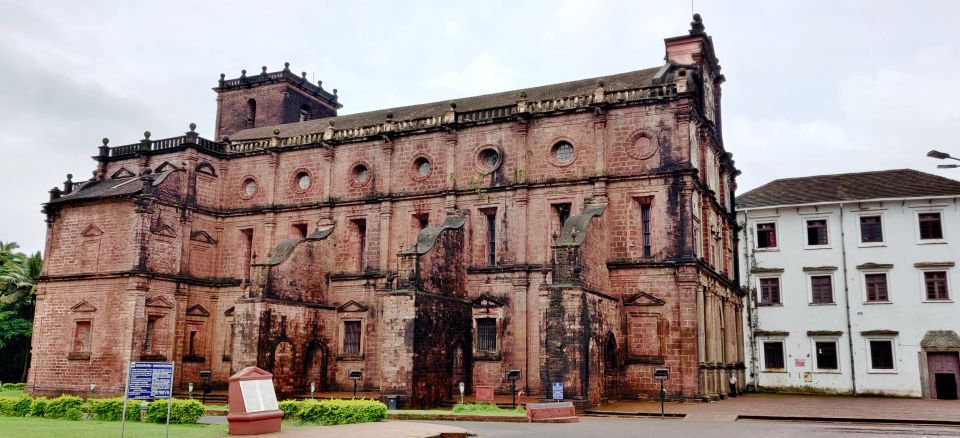
Even before St. Francis Xavier came to Goa, a policy of persecution was started in 1540 when a decision was taken to destroy temples and mosques. Many laws were passed between 154045 to curtail and reduce the religious functions of non Christians. In the Island of Goa, no temple or mosque was left by 1545. In 1567, the temples of Bardez and Salcete were destroyed. St. Francis Xavier did not stay for long in Goa. He came in May 1542 and left for Kerala in September. In 1543, he came to Goa for a few weeks only, and again for a couple of months in 1552. On his way to China, he died on 25th November 1552. His undamaged body was brought to Goa and installed in St. Pauls church. On 12th March 1622, Pope Gregory XV canonized him. In 1624, the body was transferred to the Cathedral of Bom Jesus where it lies till today. This has made Goa a centre of Catholic pilgrimage.

Tour Enquiry Form
(* represents compulsory fields)
* Name :  
* Phone : (Include Country/Area Code)  
* City  
* Your Country :  
* E-Mail Address :  
* Tentative Date of Travel:  
Number Of Nights To Stay  
No. of People Travelling:   Adult      
  Children
* Any specific requirements:


Copyright © 2007-08 Goa India Tourism.com. All Rights Reserved.

history, history of Goa,Goa history, background of Goa, Goa Background, historu Goa India, Goa hotels, Goa hotel, Goa packages, Goa tour, Goa vacation, hotels in Goa, Goa trip, honeymoon in Goa.